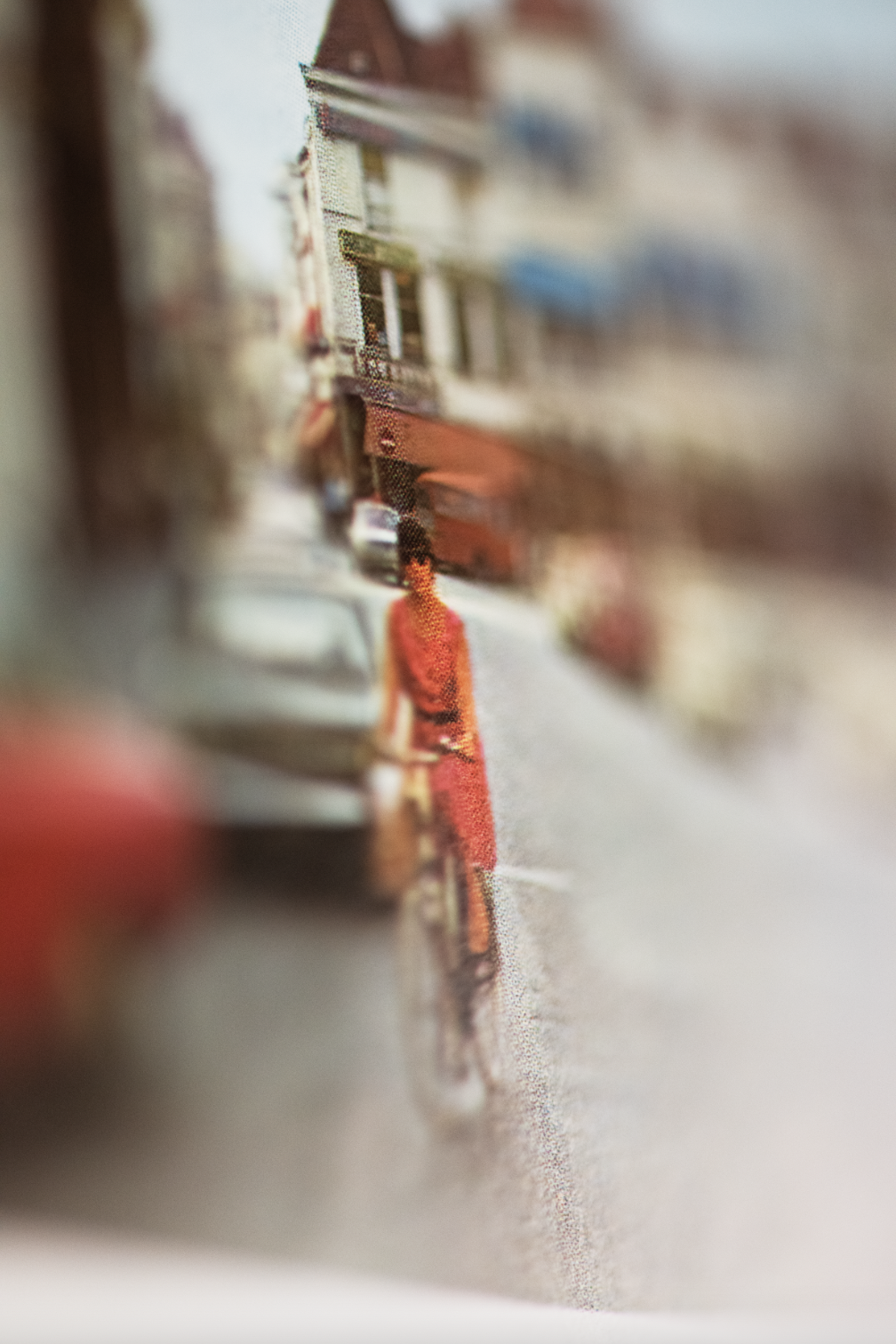
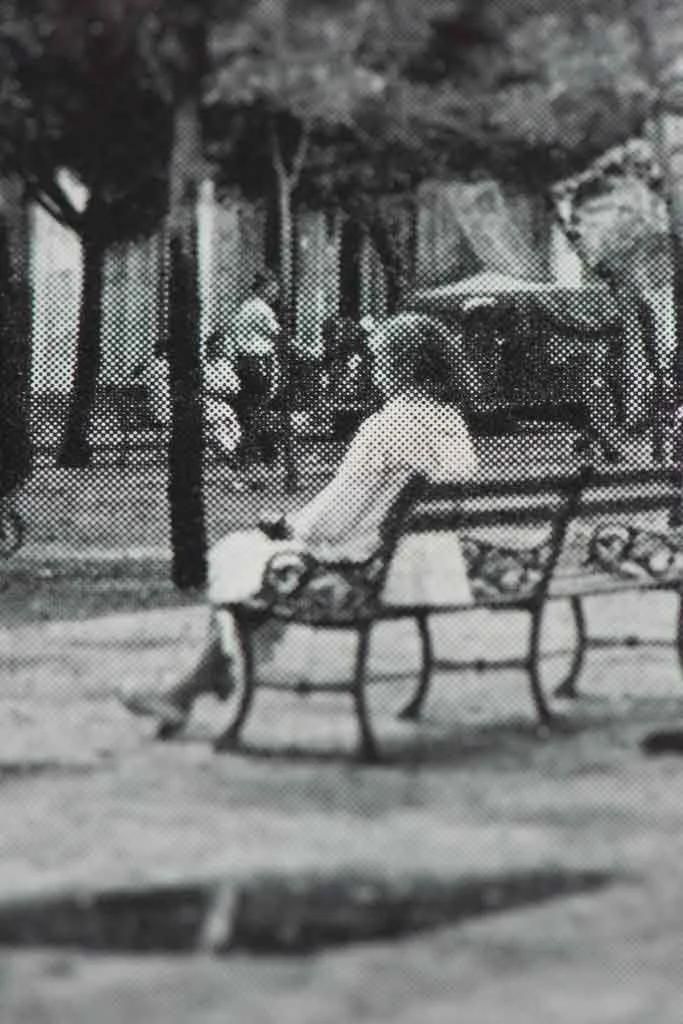
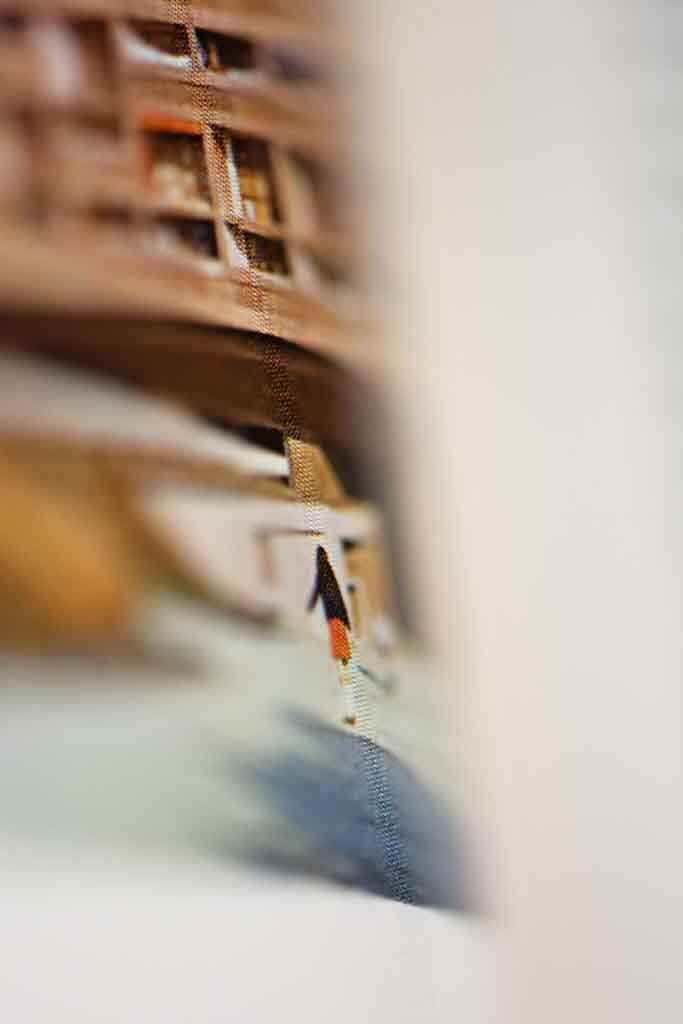
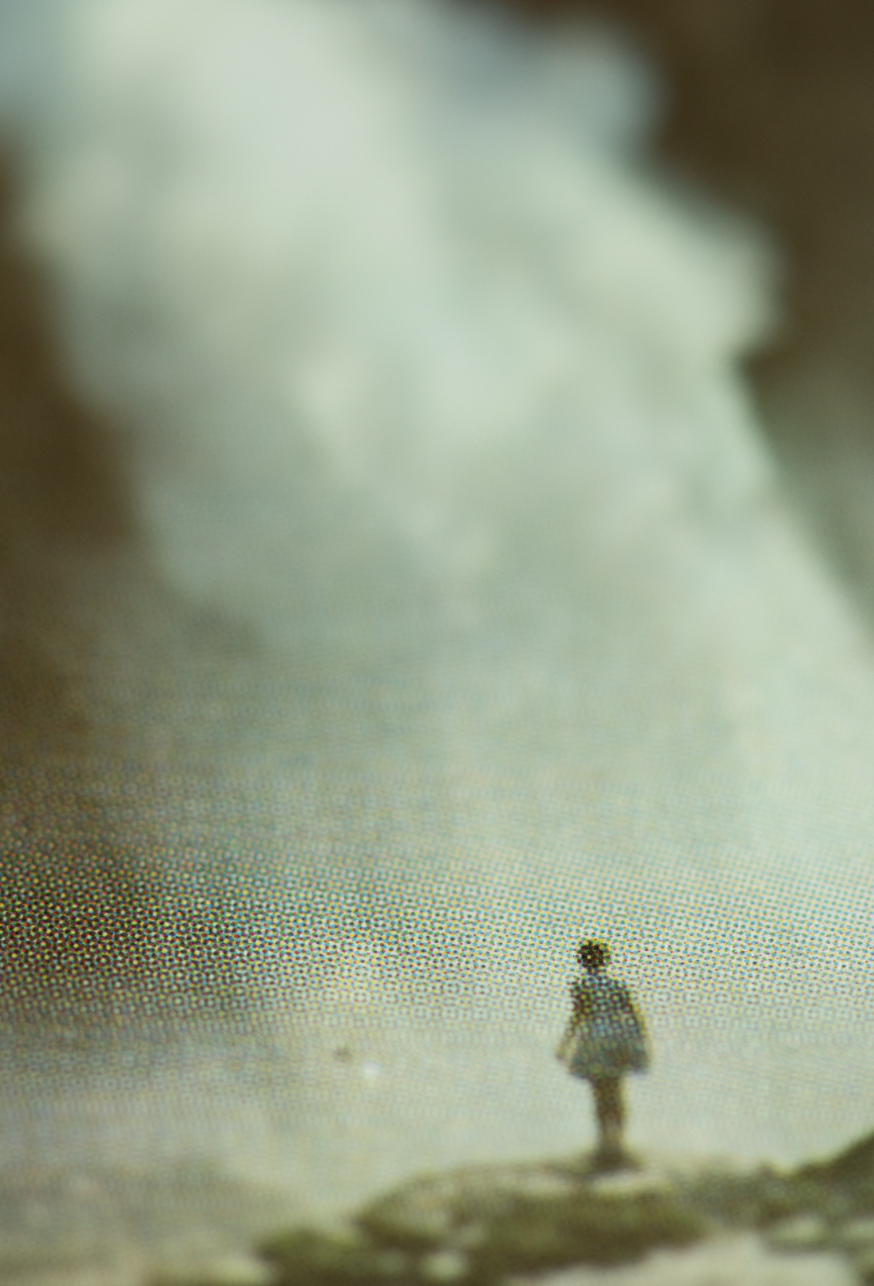
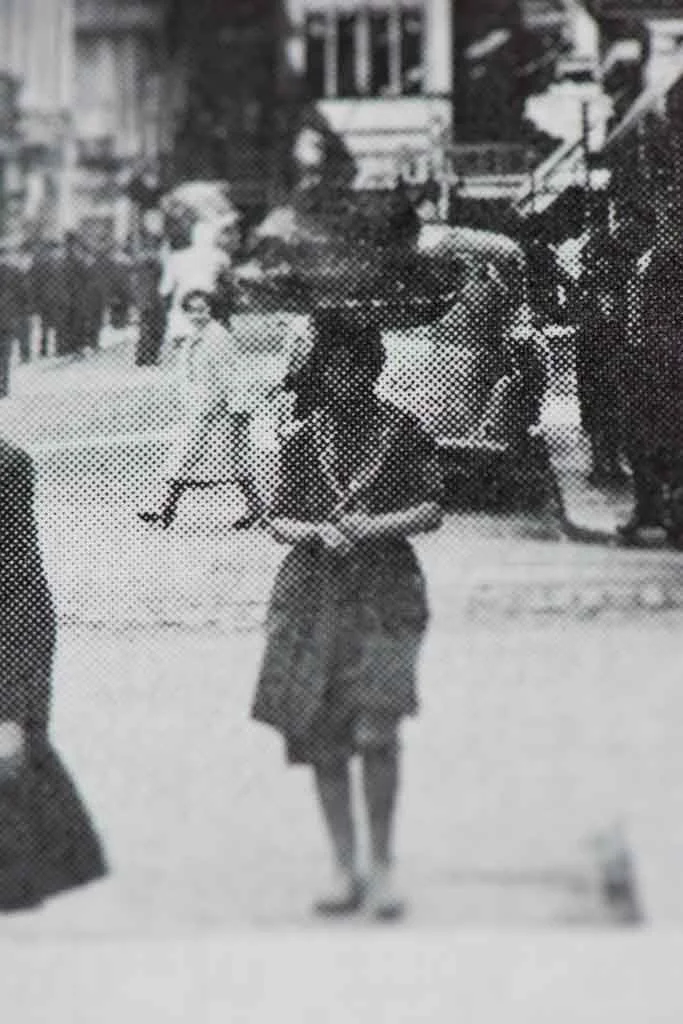
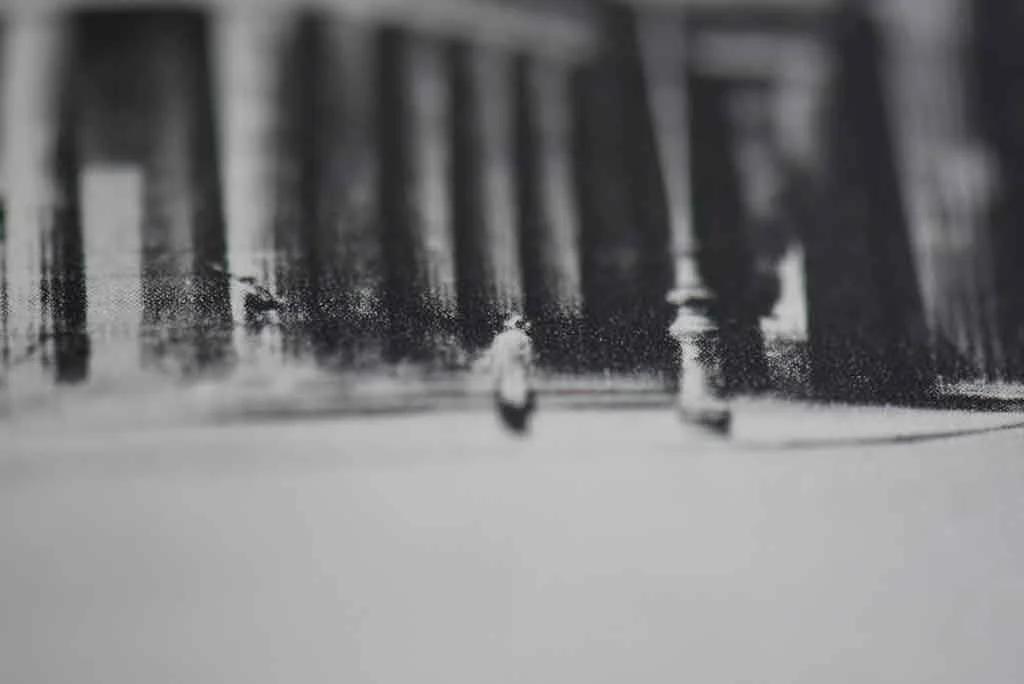
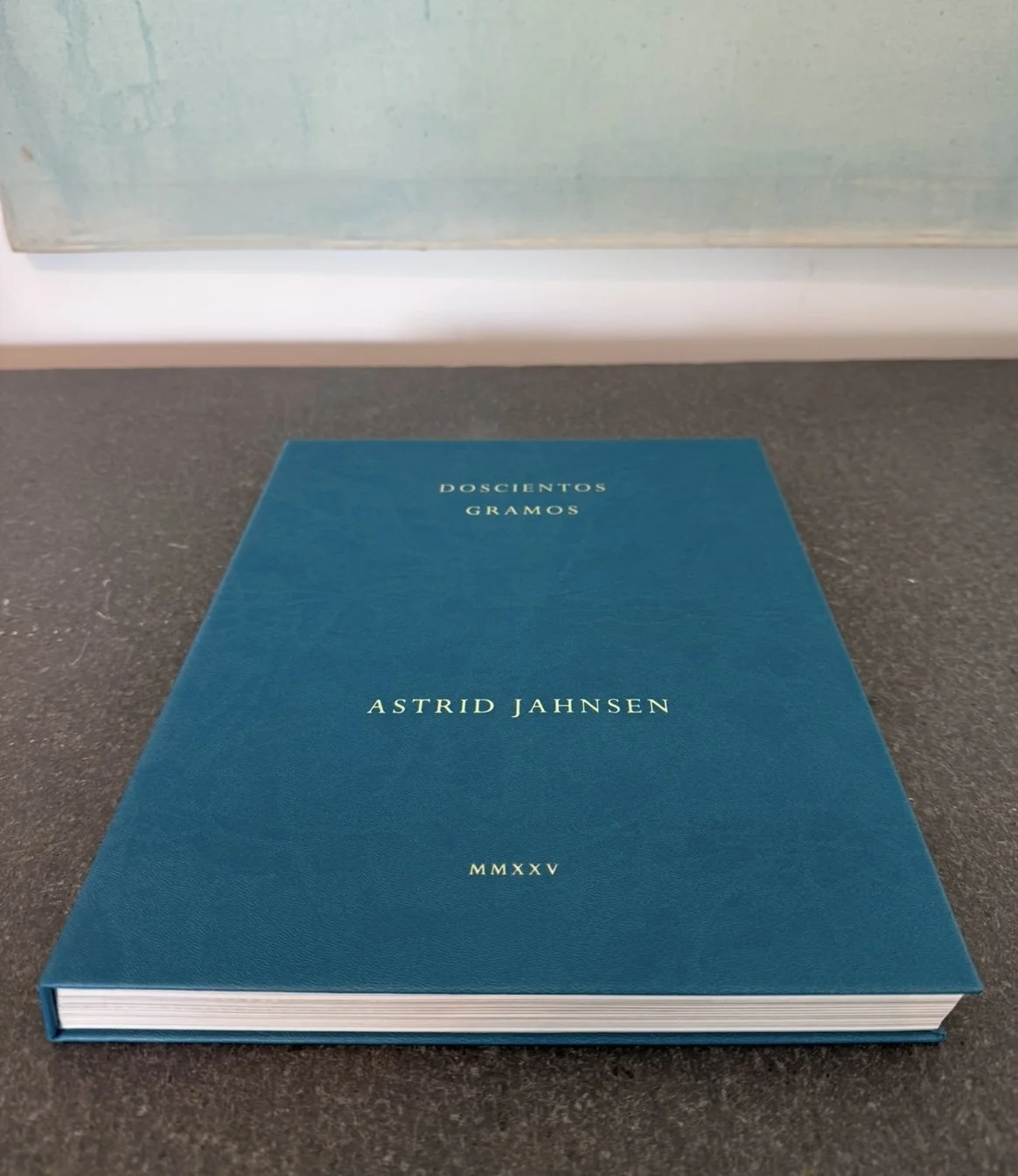
Two Hundred Grams begins with a simple and precise gesture: Astrid Jahnsen photographs images found in old encyclopedias, like the ones she used as a child while studying. Using a macro lens, she moves in very close, isolates details, blurs contexts, and reveals the material texture of the print. But this process does not only expose the physical structure of the image; it also brings to light the cultural and ideological framework that sustains it.
The project emerges from a personal experience. As a child, Jahnsen helped her grandmother solve crossword puzzles by consulting these encyclopedias. These books, which promised universal knowledge, were also the site of an unsettling discovery: women were almost absent from their pages. The protagonists of history, the geniuses, the important figures were almost all men, just like the members of the editorial boards.
From this realization, Jahnsen begins a work of recovery. She does not look for well-known female figures already recognized by history, but for anonymous women who appear by chance in the images, relegated to the background: a passerby, a worker, a student, a mother, a spectator. By re-photographing them and separating them from their original context, she brings them into the foreground and turns them into protagonists. What was once a secondary detail becomes the main image.
In this way, Two Hundred Grams can be read as a counter-encyclopedia: an archive of female presences omitted by a gaze that claimed to be objective, yet was shaped by gender bias. By preserving the trace of their origin, these recovered images invite us to look at culture differently and to question which stories were left out of dominant narratives.
The title Two Hundred Grams comes from a statement included in Astronomie des dames, a book published by Camille Flammarion at the beginning of the 20th century. In its preface, the author claims that the male brain weighs two hundred grams more than the female brain, linking this supposed biological difference to an intellectual hierarchy between men and women. Presented in a didactic and scientific tone, the phrase condenses a form of sexism that long sought legitimacy through science, education, and written culture.
By adopting this expression as its title, Jahnsen exposes it critically. Two Hundred Grams points to the way patriarchal prejudice infiltrated spaces that presented themselves as neutral and universal, such as encyclopedias and educational books. The title does not name a fact, but the supposed justification of a historical exclusion.
As the title of the exhibition, the figure no longer functions as an argument but as evidence. It loses its authority once revealed. What was once presented as truth now appears as construction. It is precisely there that Jahnsen’s work operates: dismantling that gaze and restoring weight to what had been left aside.